
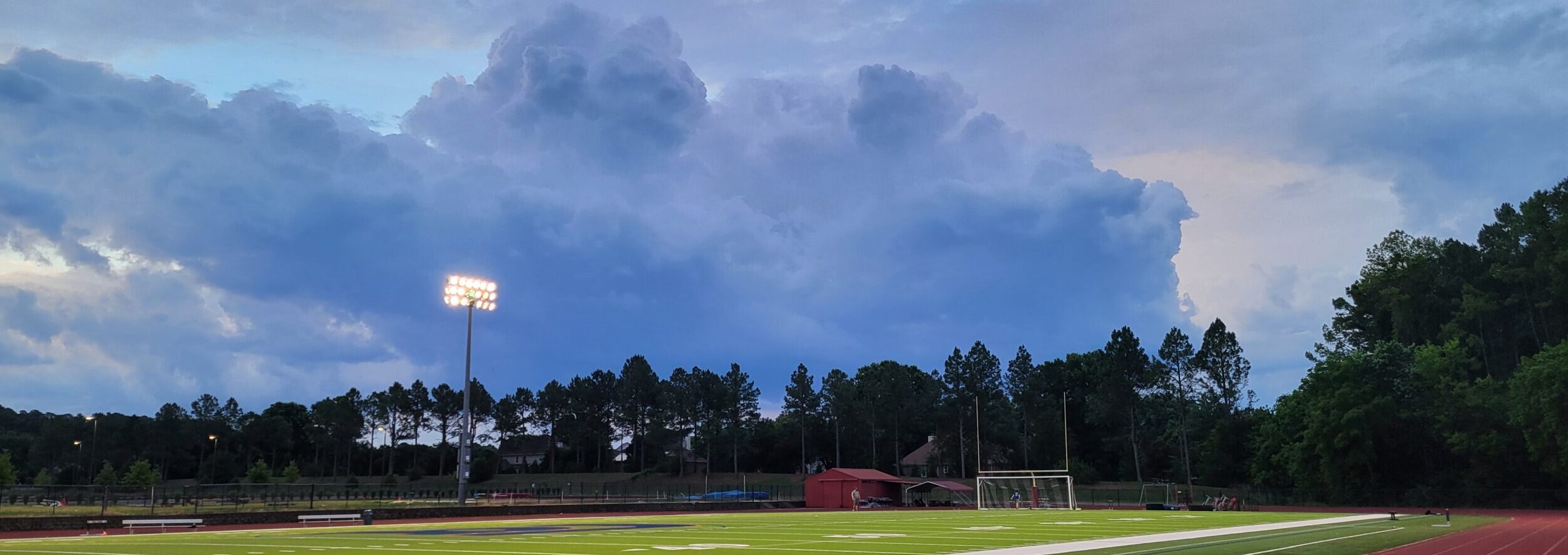
For athletes and coaches, a sudden thunderstorm can turn a practice or game into a dangerous situation. While getting off the field is the first step, understanding the specific risks and having a clear plan is crucial for protecting everyone. This guide provides actionable steps for coaches, athletic directors, and parents to ensure athlete safety when lightning is a threat.
When Thunder Roars, Go Indoors: Your First Line of Defense
The safest place to be during a thunderstorm is indoors.
Use the an adaptation from the 30/30 Rule to make a quick and confident decision to seek shelter:
- Previous guidance – 30 seconds: If the time between a lightning flash and the sound of thunder is 30 seconds or less, the storm is close enough to be dangerous. The field should be cleared immediately.
- New guidance – 50 seconds (10 miles): The distance threshold you use highly depends on the distance from safe shelter and how many individuals need to be evacuated. A general rule of thumb is to seek shelter when lightning is within 10-miles from your location. Do not wait for the rain to begin before seeking shelter!
- 30 minutes: Do not resume any outdoor activity until at least 30 minutes have passed since the last lightning strike was seen or the last clap of thunder was heard.
Your Lightning Safety Checklist
Every team should have a clear, pre-determined plan for what to do when a storm approaches.
- Designated Safe Zones: Before any practice or game, identify the nearest safe shelters. These should be large, enclosed buildings with plumbing or wiring, like a school locker room, a field house, or a gym.
- Safe Vehicles: If a building is not available, a hard-topped, all-metal vehicle with the windows rolled up offers a good level of protection. Convertible tops are not safe.
- Unsafe Zones: Never take shelter in small, open structures. This includes dugouts, scorekeeper booths, picnic shelters, or open-sided sheds. These structures provide no protection from a lightning strike.
What to Do on the Field
- Clear the Area: As soon as a weather threat is identified, coaches should immediately halt the practice or game and direct all athletes, staff, and spectators to a designated safe shelter.
- Metal Equipment: All metal equipment—including goalposts, fences, bleachers, and baseball bats—should be avoided. Do not stay near these objects.
- Disperse: If no safe shelter is immediately accessible, instruct athletes to spread out from one another and avoid huddling in a group. This reduces the risk of a single strike injuring multiple people.
When to Resume Activity
Patience is key. The 30-minute waiting period is not just a guideline; it is a critical safety measure. A storm can still produce deadly lightning strikes long after the rain has stopped. By waiting the full 30 minutes, you ensure the storm has passed safely out of the area.
By implementing a clear, well-communicated plan, coaches and athletic staff can protect their teams and ensure that the focus remains on the game—not the weather.