
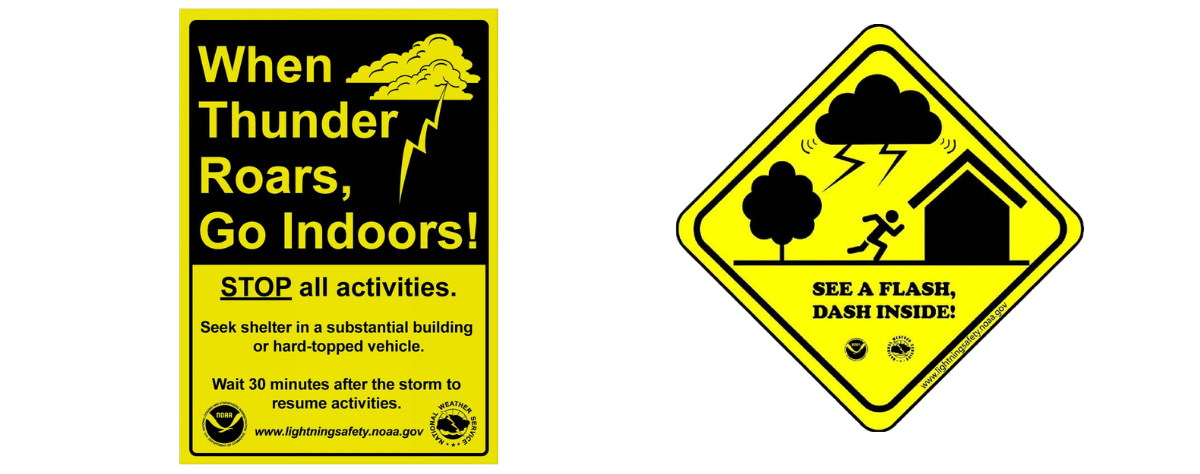
Knowing what to do when a thunderstorm is approaching is critical. A single lightning strike can be fatal. Your top priority is finding a safe place. Here’s a guide to what you need to do to stay safe from lightning when you’re outdoors.
When to Seek Shelter
“When Thunder Roars, Go Indoors” and “See a flash, Dash Inside” are simply strategies as to when to seek shelter. You can further refine these strategies based on your activities. Here are a few guidelines to consider when determining when you need to seek shelter.
- Time between lightning and thunder: When you see a flash of lightning, start counting seconds. The light will reach your eyes almost instantaneously but thunder (sound) travels much slower. You can estimate the distance of a lightning flash from your location by counting the time between the lightning flash and thunder and dividing by 5.
- Less than 10 miles? (Count of 50 seconds). Don’t panic and move to shelter.
- Your distance from shelter will impact how much time you need. Larger distances to shelter or larger groups of people will require more than 10 miles of advanced notice.
- Don’t wait for the rain to seek shelter! Lightning can be a significant risk before the rain reaches you!
When to Resume Activities
- 30 minutes: The best rule-of-thumb is to wait at least 30 minutes after the last lightning flash before returning outdoors. Lightning can strike from up to 10 miles away from the center of a storm.
- Research Insight: Research by Stano et al. 2019 found 98.6% of flashes occurred within the 30-minute waiting window – meaning 1.4% of flashes actually occur AFTER waiting 30-minutes. The assistance of a professional meteorologist or trained individual can provide guidance when to increase your wait time before resuming activities.
Where to Seek Shelter
- Safe Shelters: The best place to be is inside a large, enclosed building with plumbing and wiring, or inside a hard-topped, enclosed vehicle.
- Unsafe Shelters: Small structures like bus stops, gazebos, small sheds, porches, dugouts, or convertibles (even with the top closed) are not safe. They offer no protection from a direct strike.
What to Avoid
- Tall Objects: Do not take shelter under a tall, isolated tree. Lightning seeks the path of least resistance to the ground, and a tall tree is a prime target.
- Water and Open Fields: Stay away from open water, which can conduct electricity over a wide area. Avoid open fields, hilltops, and other elevated areas, as they increase your risk of being struck.
- Metal Objects: Drop any metal objects you’re carrying, such as bats, golf clubs, or poles. Do not stand near metal fences, bleachers, or sheds.
If You Can’t Get to Shelter
If you find yourself in a situation where a safe shelter is not available, here is what you need to do:
- Spread Out: If you are in a group, spread out. While this actually increases the chance that someone might get struck, it can limit multiple casualties, and increases the chances that someone could help if a person is struck.
Remember, no place outside is completely safe during a thunderstorm. Your best defense is a proactive plan and a healthy respect for the power of lightning. When in doubt, always go indoors.
Best Way to Stay Safe During Outdoor Activities
- Have a lightning safety plan!
- Check the weather forecast before heading outside.
- Stay weather aware during your activities.
- Know how long it will take you to get to adequate shelter.
Don’t have a lightning plan or would like help in reviewing the one you have?
Contact Schultz Weather to ensure your Athletic Inclement Weather Plan has you prepared for the next storm.
Sources:
Stano, G. T., M. R. Smith, and C. J. Schultz, 2019: Development and evaluation of the GLM Stoplight product for lightning safety. J. Operational Meteor., 7 (7), 92-104, DOI: https://doi.org/10.15191/nwajom.2019.0707 7/3/19