
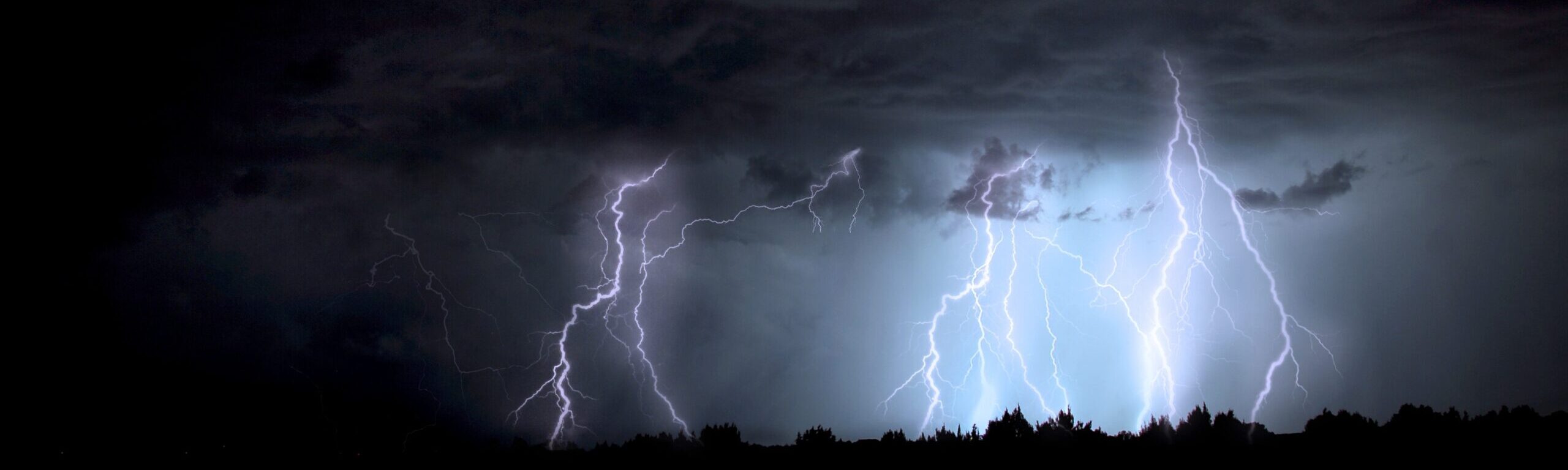
For most of human history, lightning was shrouded in mystery and superstition. Ancient civilizations attributed its raw power to gods and goddesses – Zeus hurled thunderbolts from Mount Olympus; Thor wielded his mighty hammer. These powerful mythical deities reflected humanity’s awe and fear of an unexplained force of nature.
Early philosophers, like Thales of Miletus around 600 BC, began to ponder the nature of static electricity through simple experiments, but the true connection to lightning remained elusive. Aristotle and others later proposed often flawed explanations for lightning and thunder. It wasn’t until the mid-18th century that a radical shift occurred, spearheaded by Benjamin Franklin.
In June 1752, Franklin conducted his legendary (and incredibly dangerous) kite experiment. By flying a kite into a thunderstorm with a key attached to the string, he famously proved that lightning was indeed a form of electricity. This groundbreaking discovery was a monumental leap, fundamentally changing our understanding from divine intervention to a tangible, natural phenomenon. Franklin’s work didn’t just satisfy scientific curiosity; it immediately had practical applications, leading to the invention of the lightning rod, a device that has saved countless lives and structures over the centuries. His legacy underscores how scientific understanding can directly translate to enhanced safety.
Modern Lightning Research
Modern lightning research continues to push the boundaries of our understanding of this powerful atmospheric phenomenon, leveraging advanced technology and interdisciplinary approaches. Scientists are actively investigating several key areas.
Modern Lightning Detection Instrumentation
Contemporary lightning detection relies on a multi-layered approach using both ground-based and space-borne assets. Ground networks like the National Lightning Detection Network (NLDN) and Earth Networks use Very Low Frequency (VLF) and Low Frequency (LF) sensors to triangulate the location of cloud-to-ground strikes by measuring time-of-arrival and magnetic direction. On a more localized scale, Lightning Mapping Arrays (LMAs) utilize Very High Frequency (VHF) signals to provide a three-dimensional “skeleton” of the lightning channel, mapping the intricate branches of total lightning (both cloud-to-ground and intracloud).
The most significant recent advancement is the Geostationary Lightning Mapper (GLM) aboard the GOES-R series satellites. Unlike ground networks that detect electrical signals, the GLM is an optical sensor that detects changes in brightness at the top of clouds. By monitoring lightning at a rate of 500 frames per second across the Western Hemisphere, it provides continuous, real-time data that is crucial for tracking storms over oceans and remote areas where ground sensors cannot reach.
The “Lightning Jump” Algorithm
The “lightning jump” refers to a rapid increase in the total lightning flash rate within a thunderstorm, which has been identified as a precursor to severe weather, including large hail, damaging winds, and tornadoes. Research pioneered by Schultz et al. (2009, 2011, 2015) demonstrates that a sudden spike in lightning frequency often indicates a strengthening updraft. As the updraft intensifies, it increases the collision rate of ice particles (graupel and ice crystals), which accelerates the non-inductive charging process.
Operational meteorologists use lightning jump algorithms to increase “lead time”—the interval between a warning and the actual event. By identifying these jumps in GLM or LMA data, forecasters can often issue severe thunderstorm or tornado warnings several minutes earlier than they could by relying on radar alone. This research has transformed lightning from a secondary hazard into a primary diagnostic tool for storm intensity.
Lightning Initiation and Cessation
Lightning initiation remains one of the most complex “mysteries” in atmospheric science. While we understand the macro-scale charging of a storm, the exact “spark” that triggers a kilometer-long bolt is difficult to pin down because the measured electric fields inside clouds often seem too weak to overcome the dielectric breakdown of air. Current research focuses on “hydrometeor-scale” triggers, where the presence of ice crystals or large raindrops may locally enhance the electric field enough to initiate a “leader.”
Conversely, lightning cessation—determining when a storm is no longer a threat—is a critical safety concern for outdoor venues and airport operations. Research into cessation typically looks at the decay of the storm’s “viability,” observing when the 0°C and -20°C isotherms no longer contain sufficient ice and upward vertical velocity to sustain charging. Developing reliable “All Clear” thresholds is a major focus for researchers trying to balance safety with the economic costs of extended weather delays.
High-Speed Lightning Photography
High-speed photography has revolutionized our visual understanding of lightning morphology, moving far beyond what the human eye can perceive. Using cameras capable of capturing between 10,000 and over 1,000,000 frames per second, researchers have documented the “stepped leader” process in exquisite detail. These images reveal that lightning does not travel in a single smooth motion but rather in discrete, jagged increments (steps) as the electrical potential searches for the path of least resistance to the ground.
Beyond just “cool imagery,” high-speed video allows scientists to study “recoil streamers” and “M-components,” which are smaller electrical processes that occur within the lightning channel after the main return stroke. By synchronizing this high-speed video with X-ray detectors and radio-frequency sensors, researchers can correlate the visual development of the bolt with the physical emission of radiation, providing a comprehensive look at the life cycle of a single flash.
In summary, modern lightning research is a vibrant field characterized by the use of cutting-edge technology (satellites, advanced radar, high-speed imaging), the exploration of extreme energy physics (TGFs, gamma rays), a deeper understanding of atmospheric chemistry, and a growing focus on lightning’s complex interactions with economics and global systems. These efforts are not only expanding our fundamental knowledge of one of nature’s most dramatic phenomena but are also directly contributing to improved severe weather forecasting and public safety.
Read more about Lightning Safety from the National Lightning Safety Council.